
In addition to dozens of superb beaches, Lefkada also offers visitors numerous other attractions that are definitely worth including in your plans.
Η Πόλη
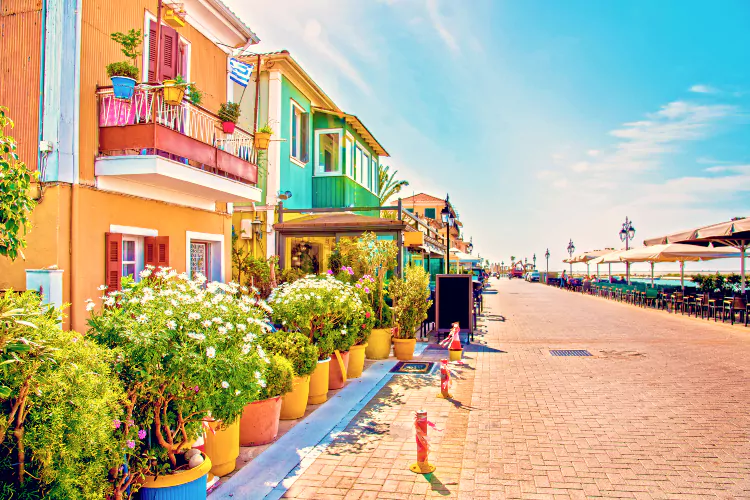
A stroll around the main town’s alleys, featuring unique Ionian Island architecture, is a great idea for viewing, drinks, food and shopping. In the main town, you may visit the Archaeological Museum, the Folklore Museum of Orpheus, the Phonograph Museum, the Lafkadio Hearn Historical Centre, and the Charamoglios Library. Churches of unique architecture, such as Naos Tou Pantokratora, are also dominant features in the main town.
Mονή Φανερωμένης
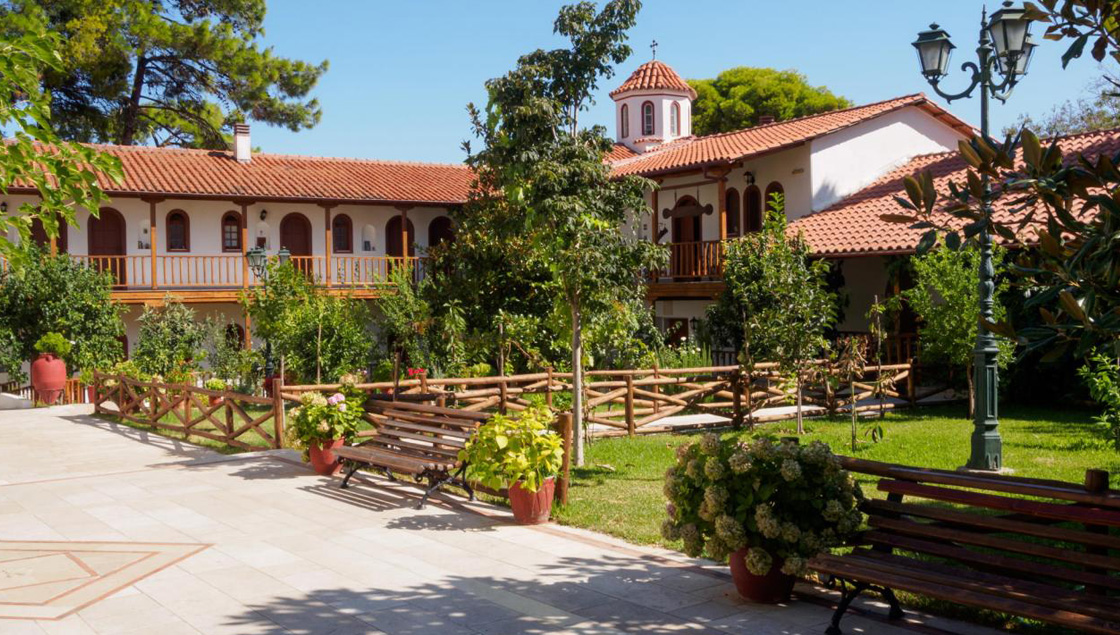
Moni Faneromenis, a historic monastery in Lefkada, is located just 3 km from the main town. It has served as Lefkada’s religious centre over centuries and is the island’s oldest and biggest monastery.
Perched at an elevated spot, the monastery offers great views of the main town, the Limnothalassa wetland, as well as Agios Ioannis and Gyra beaches.
A small zoo with various bird species and other animals features by the monastery’s main gate, within the monastery grounds.
Λιμνοθάλασσα
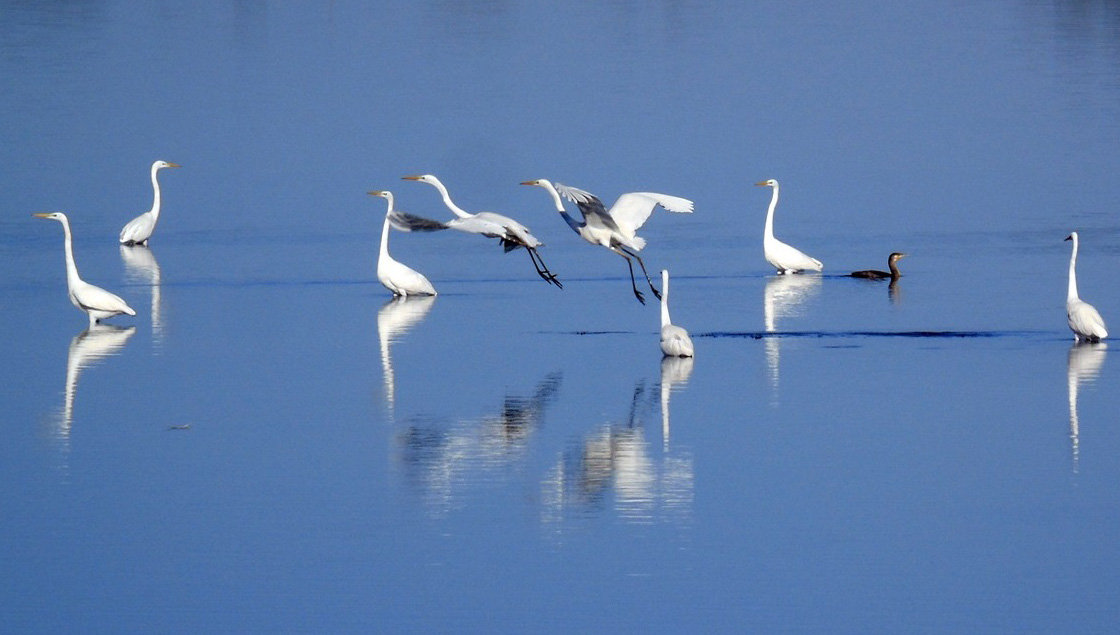
Limnothalassa, a wetland at the island’s north, is another attraction close to the main town. It hosts the Lefkada Green Half-Marathon and is a protected area that has been included in the EU’s Natura 2000 network as a result of a variety of habitats, rich flora, and a strong presence of endemic and rare species.
Καταρράκτες Νυδρί
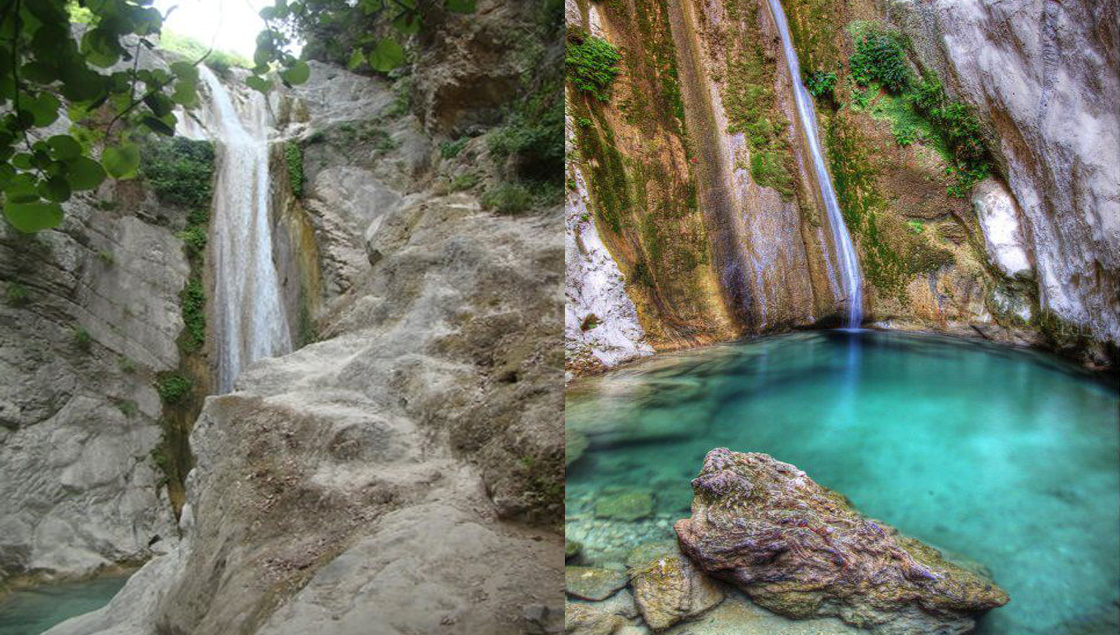
The Dimosari waterfalls, close to Nydri, resemble more of a mainland Greece setting, even though they are situated just 4 km from the sea. Despite their proximity to Nydri, Lefkada’s most touristy and cosmopolitanspot, the waterfalls offer a uniquely calm and serene setting.
Without exaggeration, the waterfalls are the island’s most significant natural attraction. Visiting the waterfalls can be a thrilling experience, even during dryer periods with minimal water.
Δάσος των Σκαρών
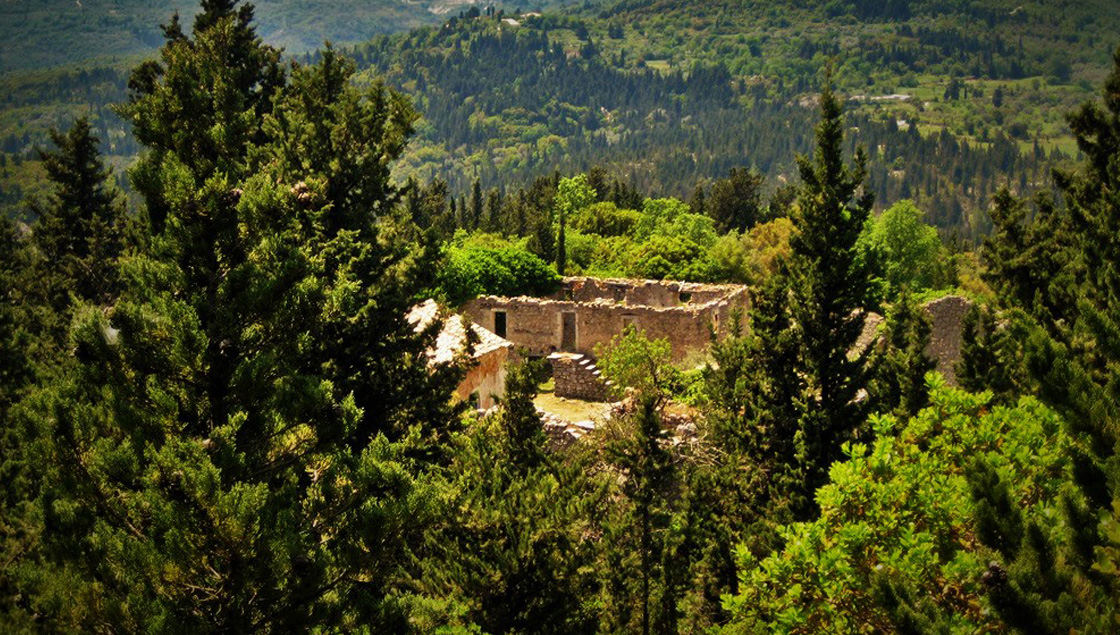
Mount Skaroi, located very close to our resort, as well as the village Kolyvata, is one of the most beautiful parts of Lefkada’s inland. The mountain features unique flora, a rare oak species forest, and an impressive geological formation. Walking to the top of the hill offers a breathtaking view.
Ακρωτήρι Λευκάδας
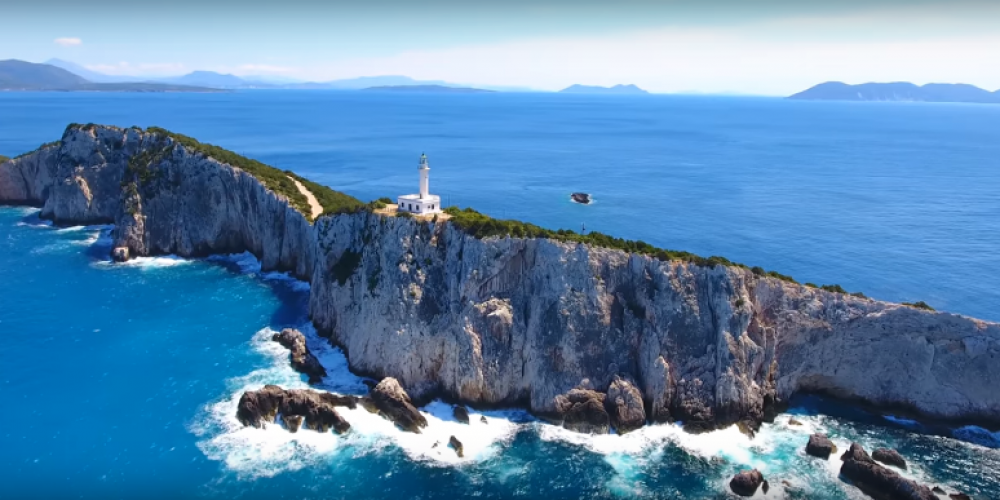
Cape Lefkata is situated at the southernmost point of the island, where a temple dedicated to Apollo stood during antiquity. The location was known as Lefkas rock or Lefkas cliff and gave the island its name. It is also known as Kavos Tis Kyras, meaning Cape of the Lady. According to legend, Sappho, the ancient lyric poet from Lesvos, took her own life by leaping from this rock because of her unrequited love of Phaon.
Σπήλαιο Παπανικολή
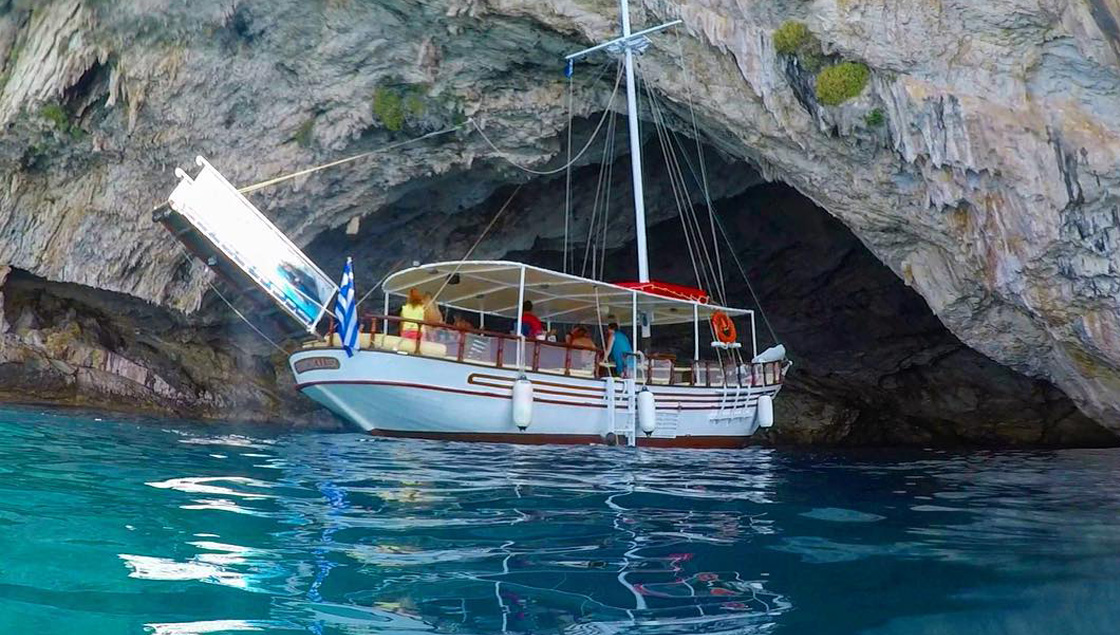
The Papanikolis cave, an impressive sea cave, served as a hideaway for the Papanikolis submarine during World War II. It is considered to be the world’s largest undersea cavity, surpassing the size of Italy’s renowned Blue Cave, the sea cave at the island Capri. The Papanikolis sea cave is approximately thirty metres deep and blessed with an idyllic small sandy beach at its interior.
Κάστρο Αγίας Μαύρας
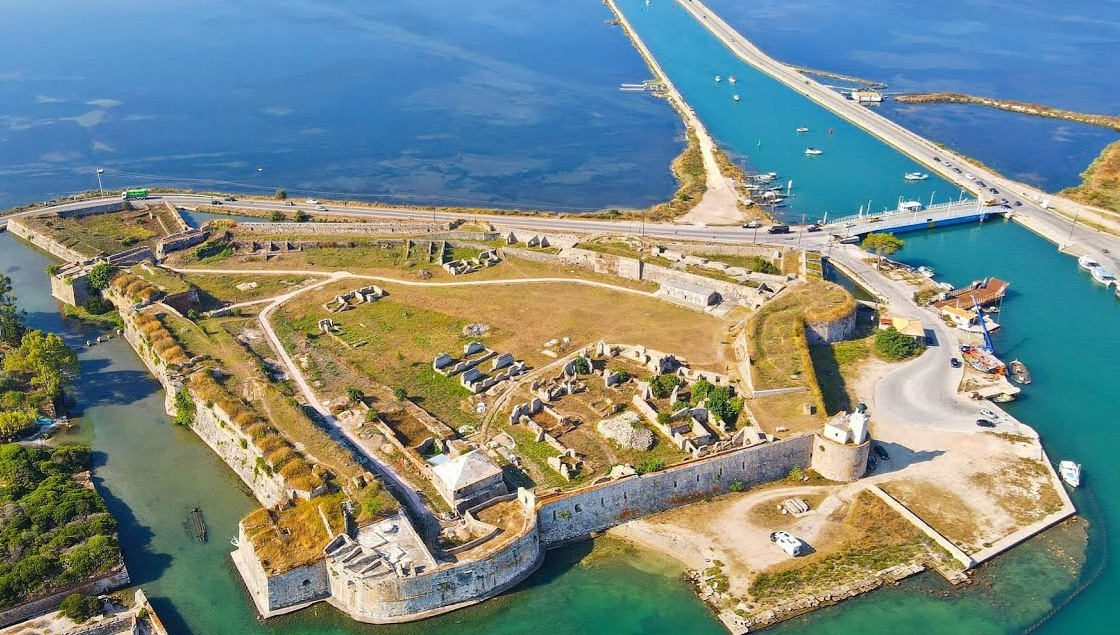
The Castle of Santa Maura, or Agia Mavra, dominating the island’s entrance, is one of the most imposing medieval buildings in Greece. It exemplifies the fortification style of its period.
This fortress, based on a peninsula located between Lefkada and Akarnania, occupies an area of approximately 25,000 square metres and has a rich military history. It has been besieged a total of twelve times over a seven-century life.
Αρχαία Πόλη Νήρικος
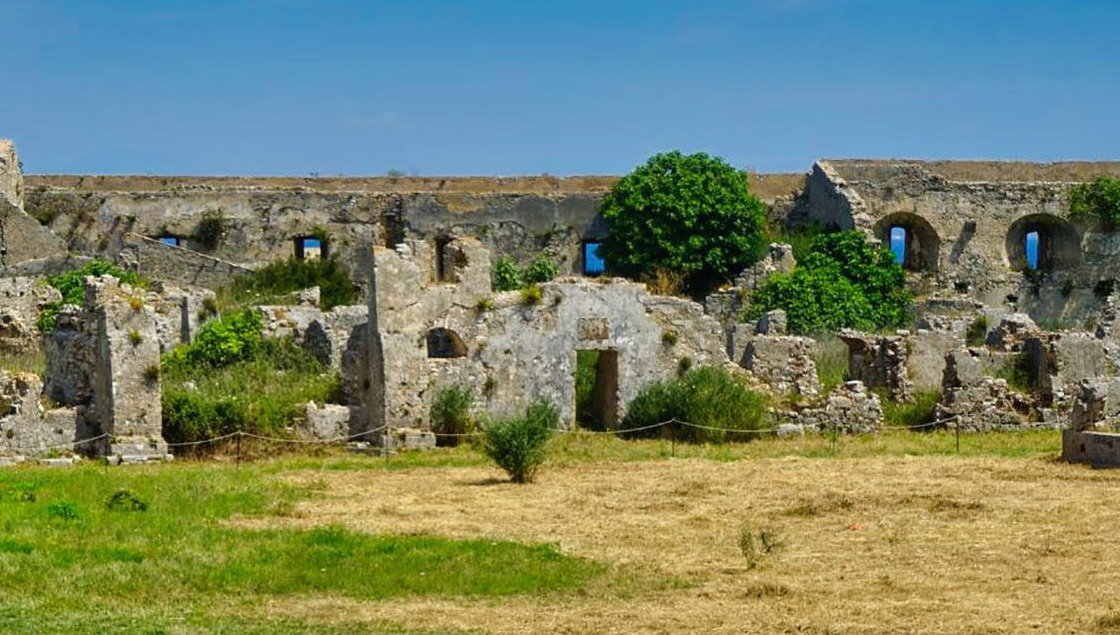
Nirikos, Lefkada’s ancient city, was located at modern-day Kalligoni, 2 km east of the main town. The route from the main town to the ancient city passes through an olive grove. Its archaeological site includes the ruins of the walled settlement of Ancient Lefkada, dating from Archaic to Roman times, two cemeteries of the ancient city, discovered in the same area, individual monuments, as well as scatteredbuilding remains.